
Vestrahorn
The Viking Village
A black mountain + A black sand beach
And longhouses that look like they never left
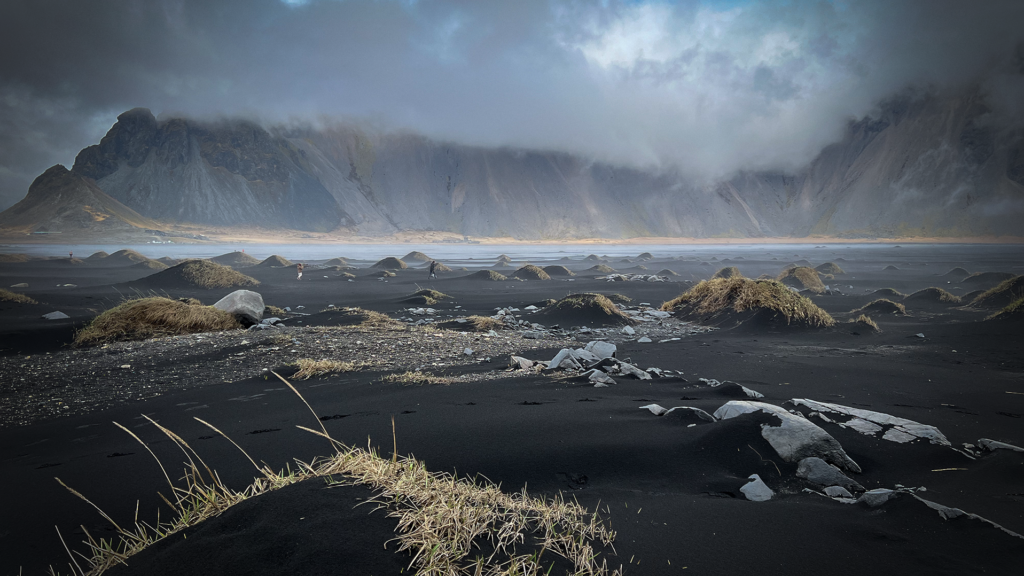
THE MOUNTAIN THAT DOES NOT APOLOGISE
Most mountains in Iceland announce themselves gradually. You see them from a distance,
growing slowly as you drive closer, giving you time to adjust to the scale.
Vestrahorn does not do this.
It rises from the Stokksnes peninsula with an abruptness that feels almost aggressive a
jagged mass of gabbro and granophyre rock that shoots straight up from a black sand beach
with no apology and no transition. Behind you, the Atlantic. In front of you, something that
looks like the edge of the world.
Vestrahorn Western Horn in Old Norse is part of the Klifatindur mountain range in
southeast Iceland. It reaches 454 metres. On overcast days, which is most days, the peak
disappears into cloud and the mountain becomes something even larger than it already is.
“It rises from the black sand with no apology
Something that looks like the edge of the world”
VÍKINGABYGGD — THE VILLAGE THAT STAYED
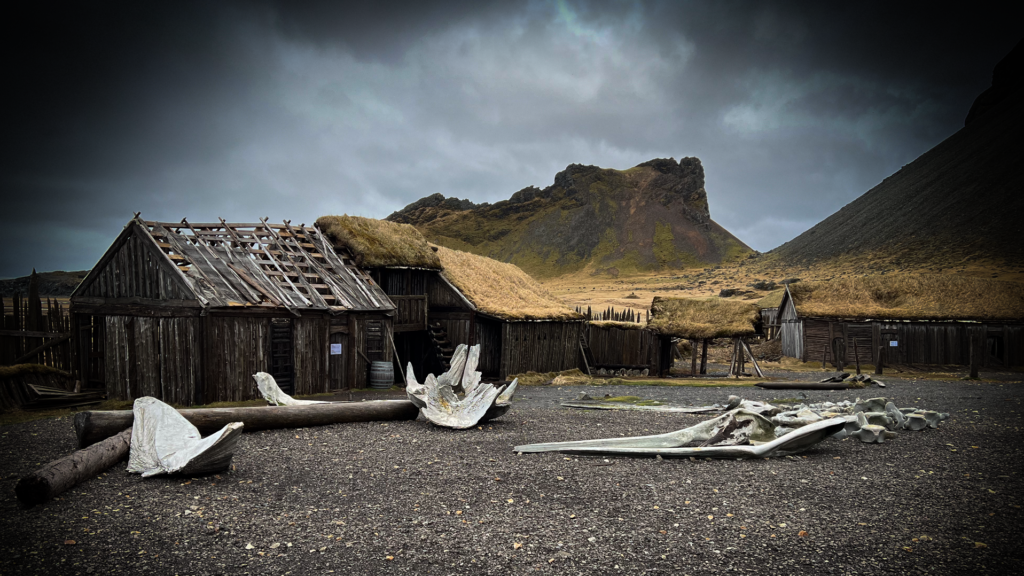
At the foot of Vestrahorn, on the black sand, there is a Viking village.
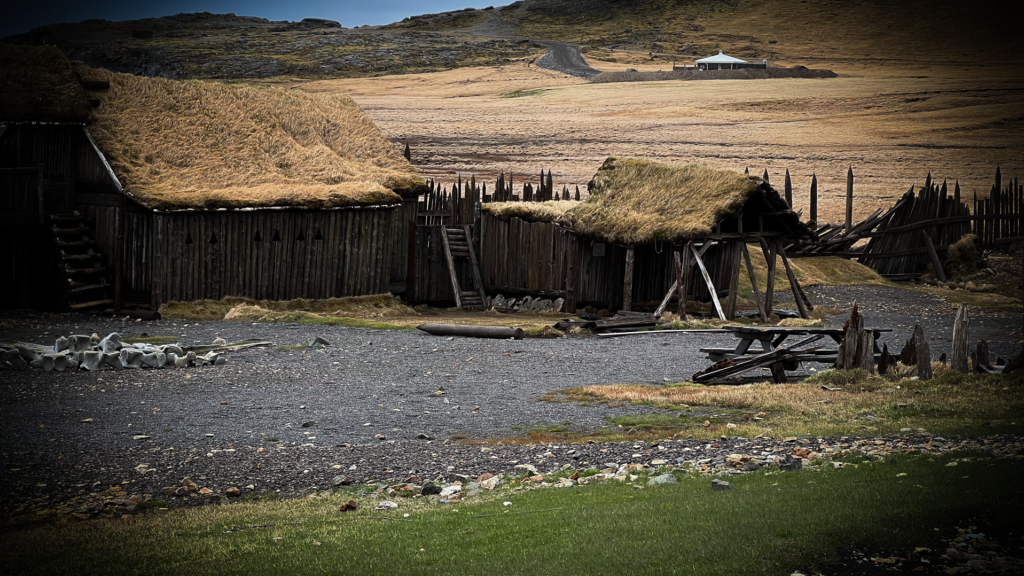
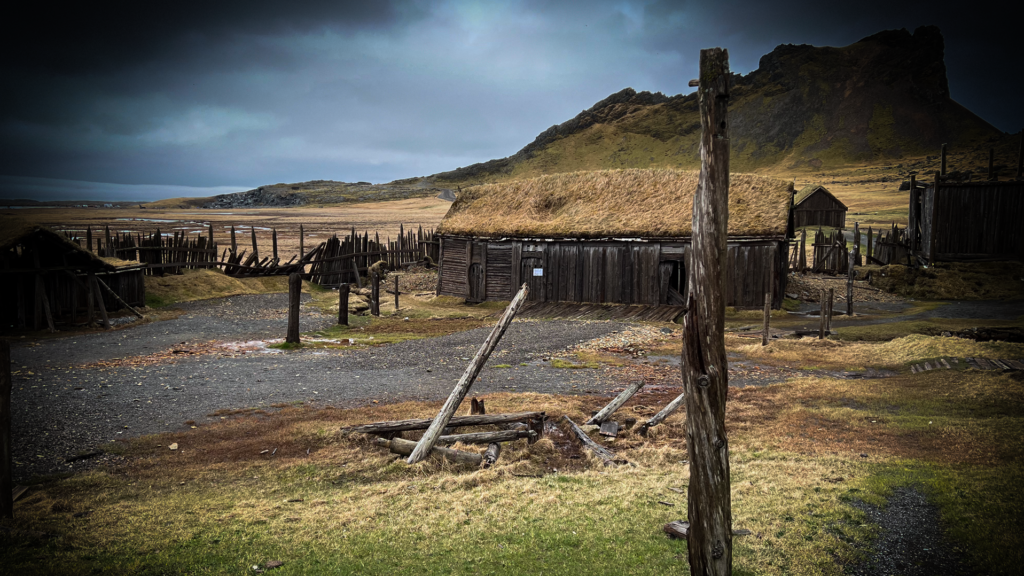
Not a museum. Not a reconstruction behind glass. A working film set turf roofed
longhouses, weathered wooden palisades, stone foundations and wooden posts that lean at
the angles time gives things when it has been working on them long enough.
Víkingabyggd was built as a film set and has been used for multiple productions the kind of
place that exists because someone needed to show what the Viking Age looked like and
Iceland’s landscape made everything else unnecessary.
You can walk through it. You can open the doors of the longhouses. You can stand inside and
look through the smoke-hole at the black mountain and understand, in a way that no museum
exhibit can give you, what it meant to live here.
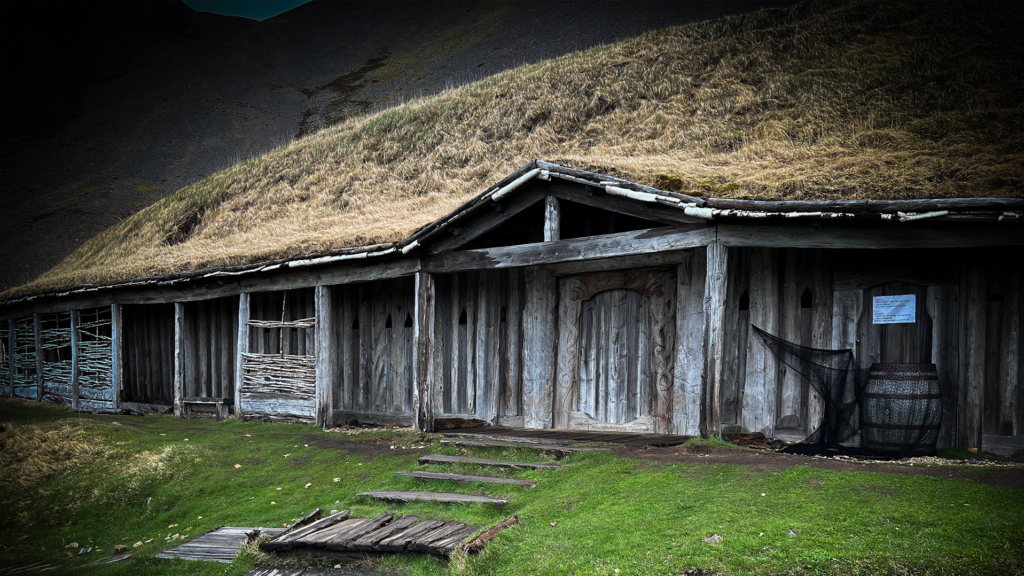
“You can open the doors. Stand inside. Look through the smoke-hole “
VISIT IT
Hire a car. The kind of road trip that only makes sense when you have spent years
thinking about what the Norse world actually looked like.
The village was empty when we arrived. No other visitors. Just the wind off the Atlantic and the
sound of the wooden structures settling in the cold.
Standing inside a longhouse with Vestrahorn visible through the doorway — that is not
something you forget. It is the moment when everything you have read and written and
designed and created stops being abstract and becomes completely, physically real.
This is why Vikings Rise exists. Not to sell products. To make the Norse world feel real for
people who cannot stand in that doorway themselves. Yet.
THE BLACK SAND BEACH
The beach at Stokksnes is one of the most photographed locations in Iceland and Iceland is
not short of photographed locations.
Black volcanic sand stretches in both directions. The mountain rises directly from it. When the
light is right low, northern, coming in at an angle the mountain reflects in the wet sand , and you get a mirror image of something that already looks unreal. Go at a sunrise if you can. Or in the hour before sunset. The middle if the day gives you a mountain. The Edges of the Day give you something else entirely.
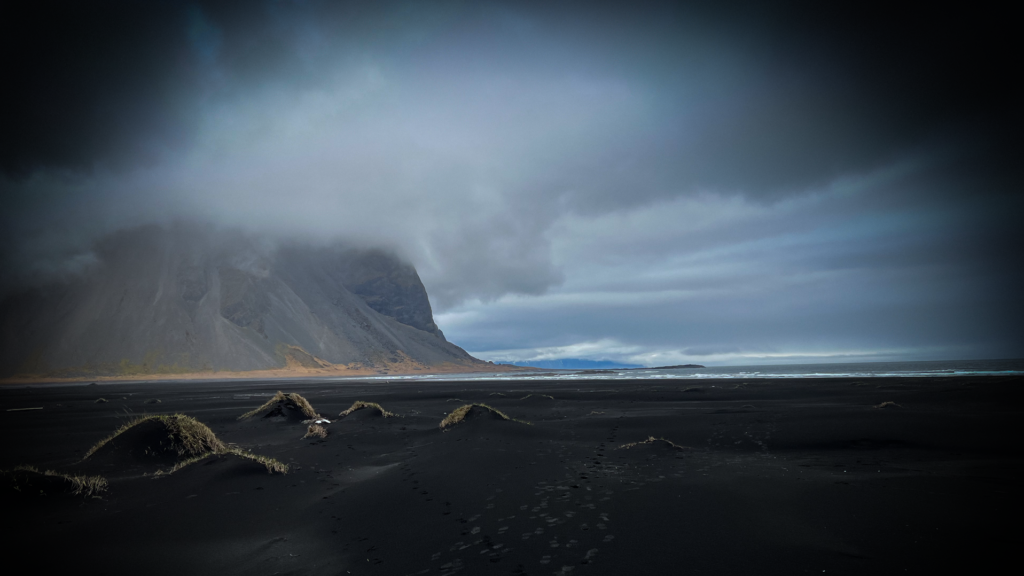
“The middle of the day gives you a mountain SO AWESOME “
VESTRAHORN — THE FACTS
LOCATION
Stokksnes Peninsula, Höfn, Southeast Iceland. GPS: 64.2553° N, 15.0337° W
HEIGHT
454 metres. Gabbro and granophyre rock formation
THE VIKING VILLAGE
Víkingabyggd — film set, open to visitors. Small entrance fee at the café gate
BEST TIME TO VISIT
Sunrise or sunset. Spring and autumn for dramatic light without summer crowds
GETTING THERE
Drive east from Höfn on Route 1. Turn south on the Stokksnes road. 15 minutes from Höfn
FILM CREDITS
Used in multiple international film and TV productions. The landscape speaks for itself
WEATHER
Unpredictable. Always bring layers. The wind off the Atlantic is constant
WHERE TO STAY
Höfn is the closest town to Vestrahorn — about 15 minutes by car. A small fishing town with a
population of around 2000, famous for its langoustine and as the gateway to the Vatnajökull
glacier.
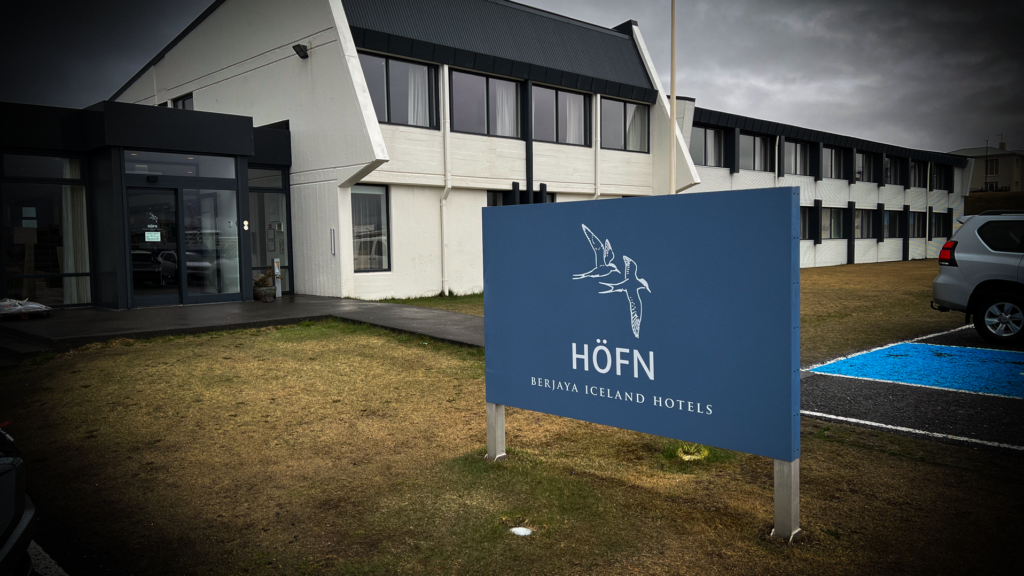
BERJAYA ICELAND HOTELS — HÖFN
The closest hotel to Vestrahorn. Clean, comfortable, with views toward the glacier. The kind of place
where you wake up, look out the window at the Icelandic morning, and drive straight to the black
sand beach.
Book via Booking.com or Hotels.com
The location is everything — you are not in
Reykjavik, not in a tourist bubble. You are in the east, where Iceland is still itself.
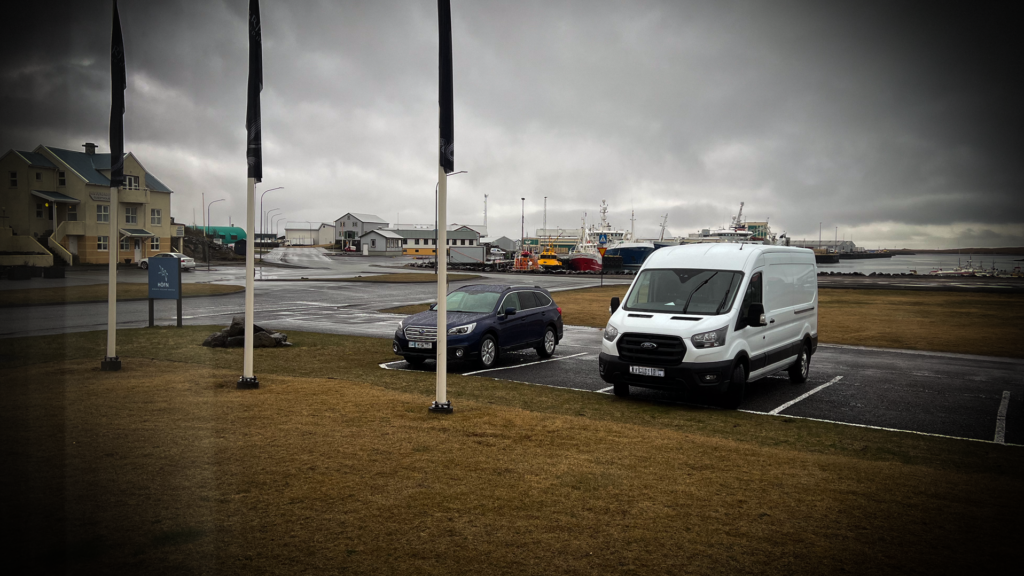
“You are not in a tourist bubble.
You are in the east, where Iceland is still ITSELF”
THE DRIVE FROM REYKJAVIK
Höfn is approximately 460 kilometres from Reykjavik along the Ring Road — Route 1. The
drive takes 5 to 6 hours without stops. Do not do it without stops.
The route takes you past Seljalandsfoss and Skógafoss waterfalls, the black sand beach at
Reynisfjara, the glacier lagoon at Jökulsárlón and the Diamond Beach where icebergs wash
ashore. Every hour of the drive is worth stopping for.
Give yourself two days minimum for the drive east. Stay one night somewhere on the south
coast. Arrive in Höfn rested. Go to Vestrahorn in the morning before anyone else arrives.