VIKING LOCATIONS
Hallgrímskirkja
The Church That Remembers
It does not look like a church. It looks like something that grew out of the earth and
decided to become a building
Built 1945 — 1986 · Reykjavik, Iceland
THE FIRST THING YOU SEE
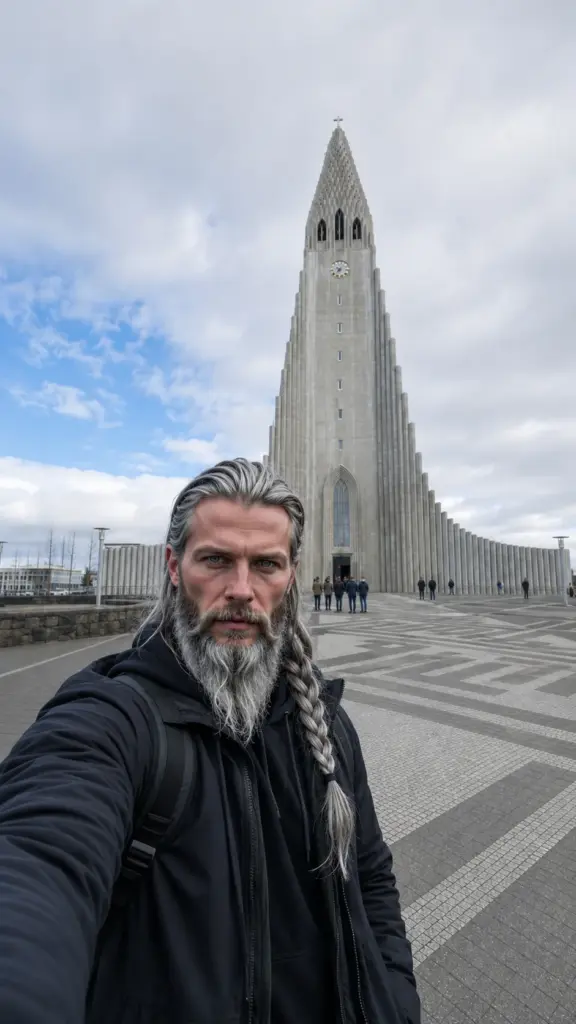
You can see it from almost anywhere in Reykjavik. 73 metres tall. Concrete the colour of
Nordic winter sky. A tower that tapers upward like a basalt column — like the volcanic rock formations that line Iceland’s coast and remind you constantly that this island is still being made.
Hallgrímskirkja is the largest church in Iceland and the sixth tallest structure in the country.
But those are statistics. What matters is what it feels like to stand in front of it and look up.
It feels old. Impossibly old. As if it has always been there as if Reykjavik grew up around it
rather than the other way around.
It hasn’t. Construction began in 1945 and took forty-one years to complete.
But the architect
understood something important that a building in Iceland needs to look like it belongs to
the landscape, not like it was imported from somewhere else.
“It feels old. Impossibly old. As if Reykjavik grew up around it.”
GUDJÓN SAMÚELSSON — THE MAN WHO LISTENED TO LAVA
The architect was Gudjón Samúelsson. State Architect of Iceland for thirty years. A man who
spent his career asking one question — what does Icelandic architecture look like when it
grows from Icelandic ground?
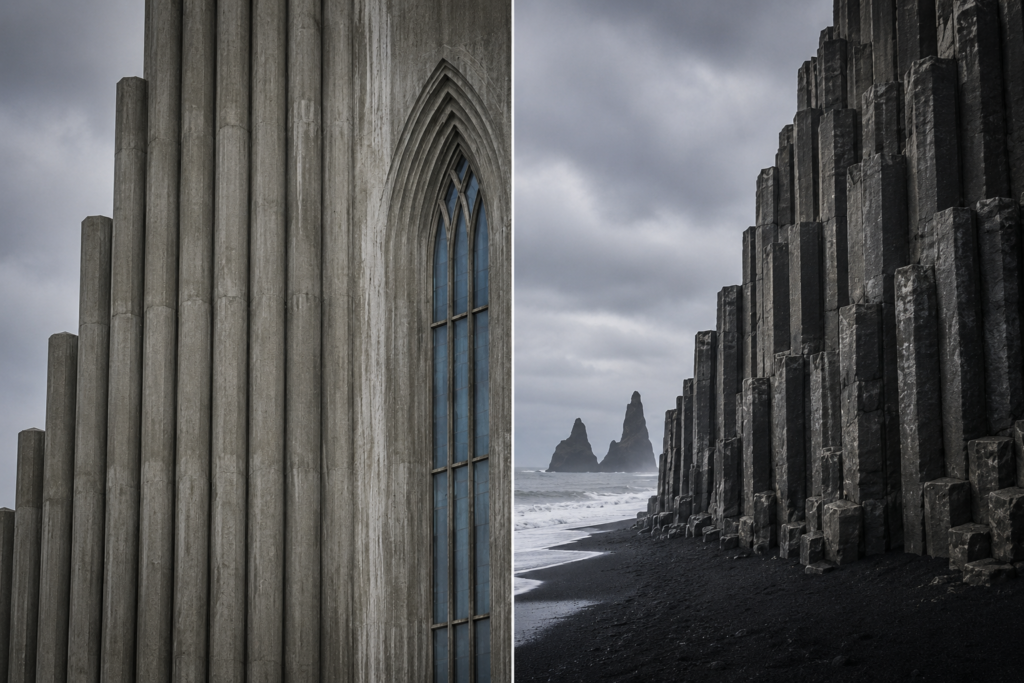
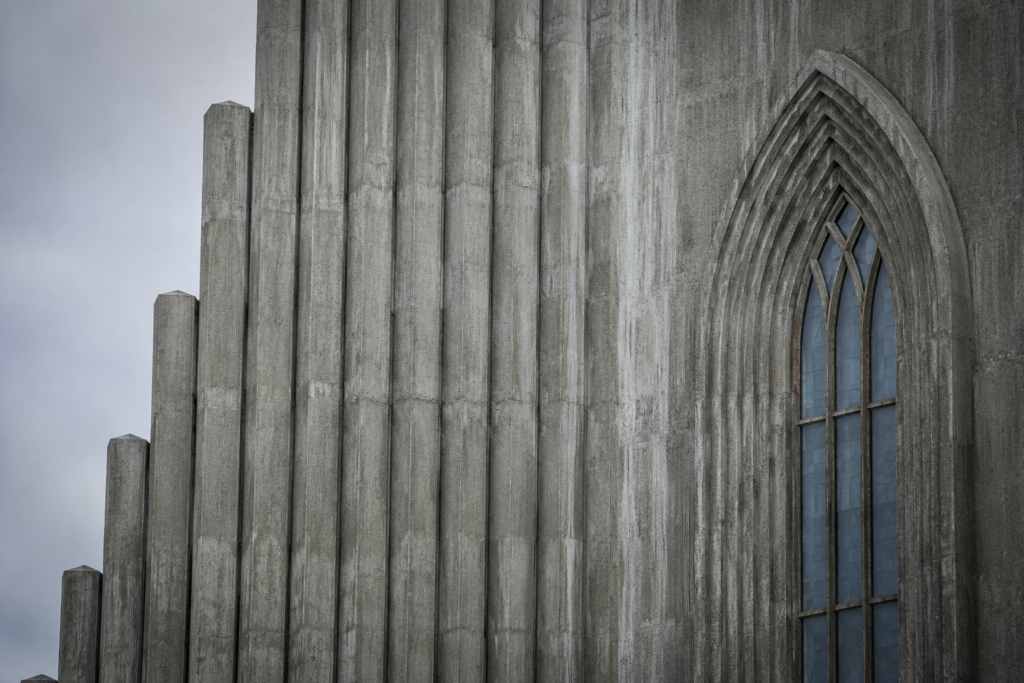
His answer was basalt. The hexagonal columns of volcanic rock that form along Iceland’s
coastlines when lava cools slowly Reynisfjara, Svartifoss, the Giant’s Causeway across the
water in Ireland. Nature’s own architecture. Perfectly geometric. Entirely organic.
Hallgrímskirkja’s facade is those columns — abstracted, scaled up, rendered in concrete that
catches the grey northern light and holds it differently at every hour of the day.
Samúelsson designed it in 1937. He died in 1950, long before the tower was finished. He
never saw it complete.
“He designed it in 1937. He never saw it complete
Some things are built for the future”
THE MAN WHO STANDS OUTSIDE
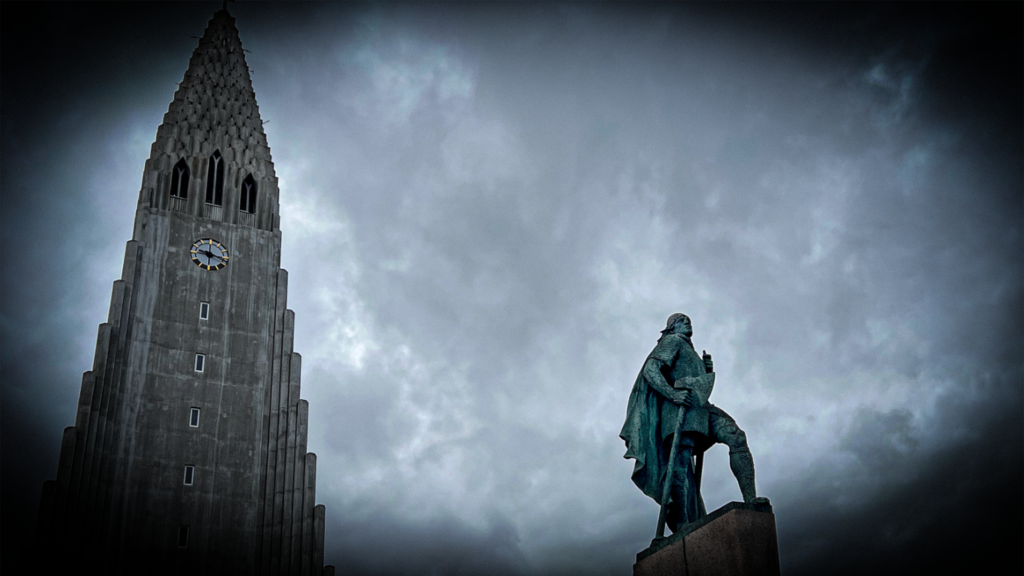
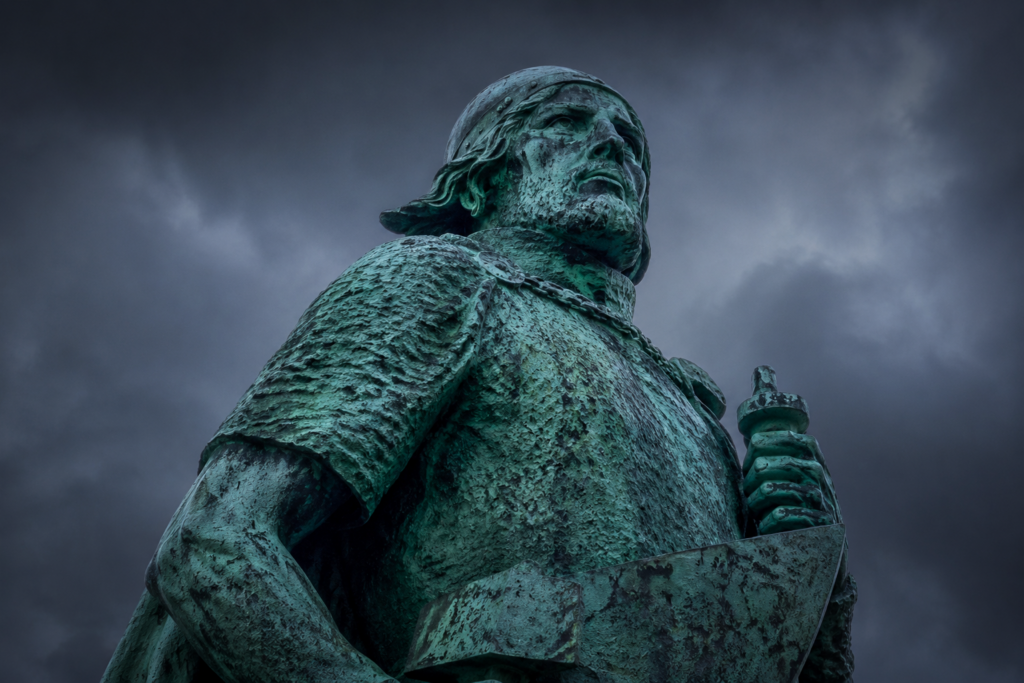
Before you reach the church door, you pass him. He faces west. Always west.
Leif Erikson son of Erik the Red, the Norse explorer who reached North America five
hundred years before Columbus stands on his plinth with one hand raised, pointing at
something beyond the horizon.
The statue was a gift from the United States to Iceland in 1930, presented on the
thousand-year anniversary of the Alflingi the Icelandic parliament, one of the oldest
democratic institutions in the world.
It stands in front of a church built to resemble volcanic rock, in the capital of the island where
the sagas were written down, pointing west toward the continent Leif’s people found and then
forgot. There is no better place in the world to understand what the Norse world was and what it
left behind.
“There is no better place in the world to understand
what the Norse world left behind”
Ari comes from this place. Not metaphorically literally. The landscape that shaped his face,
his stillness, his way of standing in cold water as if it costs him nothing this is where that
comes from.
When Ari stands in front of Hallgrímskirkja, he is not a tourist. He is someone coming home to
a building that was always in the background.
ARI SPEAKS
HALLGRÍMSKIRKJA — THE FACTS
HEIGHT
73 metres — tallest church in Iceland, sixth tallest structure in the country
CONSTRUCTION
Designed 1937 by Gu›jón Samúelsson. Built 1945—1986. 41 years.
ARCHITECT’S INSPIRATION
Svartifoss waterfall and Iceland’s basalt column lava formations
THE ORGAN
5275 pipes. One of the largest organs in the world. Installed 1992.
THE VIEW
Elevator to the tower — 360° view of Reykjavik and surrounding mountains
LEIF ERIKSON STATUE
Gift from USA to Iceland, 1930. Sculptor: Alexander Stirling Calder.
NAMED AFTER
Hallgrímur Pétursson — Icelandic poet and clergyman, 1614—1674
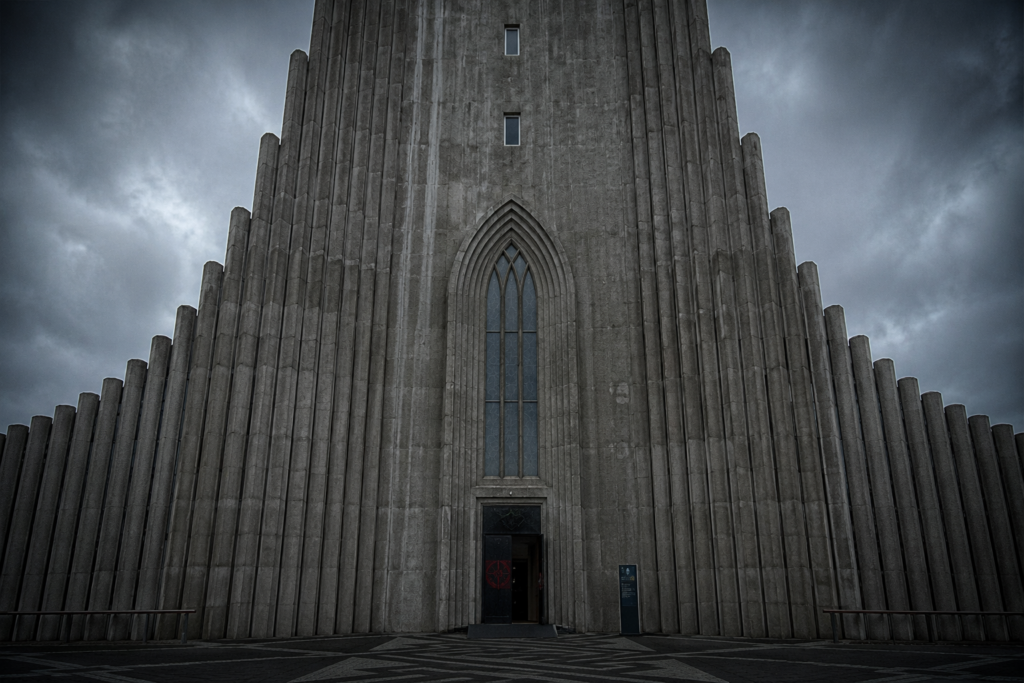
Hallgrímskirkja sits at the top of Skólavördustígur — the main street that leads up from the old
harbour. You can see the tower from almost anywhere in the city centre. Walk toward it. You
cannot get lost.
The church is open daily. The tower elevator costs a small fee but the view is worth it
especially on a clear day when you can see Snæfellsjökull glacier on the horizon.
Go early morning or late evening when the light is low and northern and the concrete holds the
colour of the sky. That is when it looks most like what it is a building that grew from volcanic
ground and pointed itself at heaven.